
Following Apostle Paul steps/ path in Greece
HIGHLIGHTS
Apostle Paul private tour.
Places he visit and places he stopped during his journey in mainland of Greece.
- Meteora & Orthodox Monasteries
- Aegae Macedonian Royal Palace & Tombs
- Veria & Apostle Paul Vema
- Pella (Birth city of Alexander III)
- Neapoli / Modern Kavala
- Philippi & Lydia’s Baptistery
- Amphipolis – Apollonia
- Thessaloniki/ Roman Agora/ Vlatadon Monastery:
- Nikopolis /
- Delphi
- Piraeus – Athens – Acropolis
- Corinth – Isthmia – Kechries Port
One of the most remarkable religious routes in Greece is “The Route that Apostle Paul Followed in Greece”. Paul constitutes a remarkable personality for the Christian religion, although he never belonged to Jesus’ 12 Disciples cycle.
ITINERARY
Itinerary/ Route.
Schedule is flexible. If for any reason this is not convenient, we can make changes according to your needs. We can exclude one day or include one / two days more in order to travel at your leisure.
Total Duration: 8 days
Accommodation Not included, but we can make an arrangement for you and your driver in Boutique hotels 3 /4 stars. See additional travel info
Day 1: In the footsteps of Apostle Paul to Greece (Meteora Rocks – Overnight)
Day 2 : In the footsteps of Apostle Paul to Greece (Aegae & Macedonia Royal Tombs- Veria / Apostle Paul Vema – Overnight)
Day 3 : In the footsteps of Apostle Paul to Greece (Pella/ Alexanser’s Birth City – Thessaloniki / Catacombs- Overnight)
Day 4 : In the footsteps of Apostle Paul to Greece (Philippi / Lydia – Kavala/ Neapolis – Overnight)
Day 5 : In the footsteps of Apostle Paul to Greece (Amfipolis – Mount Olympus- Dion/ Overnight)
Day 6 : In the footsteps of Apostle Paul to Greece (Delphi/ Apollo Oracle – Mount Parnassus/ Overnight)
Day 7 : In the footsteps of Apostle Paul to Greece (Levadia – Mount Kithaeron – Ancient Corinth, Nafplion/ overnight)
Day 8 : In the footsteps of Apostle Paul to Greece (Corinth Canal, Athens: Acropolis Hill/ Areios Pagos / Highlights)
INCLUSIONS -EXCLUSIONS
See All Views Travel offers Private and Flexible tours, just for you, your Family, your Friends or your own group.
Inclusions:
- Pick up / Drop off – from/ to your Hotel or Apartment in Athens, Piraeus or Airport.
- Air-conditioned vehicles, with high level of cleanliness (Sedan/SUV/ Minivan/ Minibus)
- Private Transportation includes: (Fuels, Toll Roads, Parking Fees)
- Professional English speaking experienced Tour driver leader. Your tour driver provides informative books, map, audio documentary with historical details as you travel.
- Complimentary accommodation for your tour driver and his expenses .
Exclusions:
- Entrance Fees to all sites & museums. (See Entrance Fees)
- Meals or Personal expenses.
- Accommodation in A’class Boutique Hotels or 4* Hotels where are available. Reservation is up to prior agreement. (See travel info)
- Archaeological tour guide for Acropolis hill upon prior request (Additional charge at 250€ – Depends availability)
- Any other sites, only up to a prior request. Local tour guides have to be booked in advance.
- Gratuities (See Travel info).
ENTRANCE FEES
Acropolis Hill (Includes: Propylaea/ Erecthion/ Parthenon, Herodion & Dionysus Theatres) Full : 30€, Reduced: 15€ in winter time. Mars Hill free entrance.
Athens Acropolis Museum: 20€ from 08:00 – 20:00 (For free/ reduse fees read info)
- Winter: November 1st -March 31st. 08:00 – 17:00 Last entrance 16:15.
- Summer: April 1st -October 31s. from 08:00 – 20:00 Last entrance: 19:30
Any other site: Full from 15 € to 20 €, Reduced: 8€ to 10 € in winter time.
- Winter: 08:00-15:00 Last entrance: 14:40
- Summer: 08:00 – 19:30. Last entrance:19:00 Every Tuesday the museum opens at 10:00.
Closed on Holidays:
- January 1,
- 6 January: 08:30 – 15:30
- Shrove Monday: 08:30 – 15:30
- March 25,
- Good Friday: 12:00 – 17:00, Last admission 16:40
- Holy Saturday: 08:30 – 15:30, Last admission 15:10
- Orthodox Easter Sunday,
- May Day Celebration,
- December 25-26.
Free admission days:
- Free admission: first and third Sunday of each month from 01/November until 31/March.
- 6 March (in memory of Melina Mercouri)
- 18 April (International Monuments Day)
- 18 May (International Museums Day)
- The last weekend of September annually (European Heritage Days)
- 28 October
The following categories of visitors are entitled to free admission:
- Children and young people up to the age of 25, from EU member-states, upon presentation of their ID card or passport for verification of their age and country of origin.
- Children up to the age of 18, from non-European Union countries, upon presentation of their passport for verification of their age and country of origin.
- Escorting teachers during educational visits of schools and institutions of primary, secondary and tertiary education from EU member-states and countries of the European Economic Area
The following categories of visitors are entitled to 50% reduced admission in tickets:
- Senior citizens over 65 from Greece or other EU member-states, upon presentation of their ID card or passport for verification of their age and country of origin, during the period from 1st of October to 31st of May
- Parents accompanying primary education schools visits from EU member-states and the European Economic Area.
- Escorting teachers of educational visits of schools and institutions of primary, secondary and tertiary education from non European Union countries.
TRAVEL INFO
Mode of Travel: Private tour. Schedule is flexible, but most importantly we can drive on small roads and you will not just see the sights through a bus window. See all Views Travel.
Tour Style: Leisurely to Moderate. See the main cultural and best clasical as biblical sites of Greece. Time is allowed for gentle walks, swimming and coastal relaxation, At summer, hats, sun glasses and *suntan lotion (*Please do not place it inside vehicle) are highly recommended.
Accessibility: Not wheelchair accessible/ Infant seats available
Open hours for sites – Winter: From the 2nd of January until the 28th of February 08:30 a.m. up to 15:30 p.m. From 1st to 31st of March 08:30 am to 16:00.From April 15th to 31st Aug. Extended 08:00 – 20:00. 1st to 15th September: 08:00-19:30, 16th to 30th September: 08:00-19:00, 1st to 15th October: 08:00-18:30, 16th to 31st October: 08:00-18:00. Nov 1st to Dec 31st 08.00 – 16.00. On Tuesday some of the archaeological sites/museums remains closed
The tour driver is not a licensed archaeological guide to accompany you on your walk to archaeological sites or museums. If you require an archaeologist guide to tour the sites with you, you need to hire one additionally (in prior time). If you have any questions you can contact us on the phone number.
Accommodation: Please book this tour, at least 2 weeks prior, as we need time to reserve rooms for you and your driver. Peloponnese is a very popular area and July August are very busy. * We can arrange accommodation for you in selected Boutique Hotels A’class or 3/4* Hotels with breakfast (additional cost from 160€ per double room / weekend-holidays 180€ per double room/ if more than 2 rooms 10% less. Driver’s room complimentary). If you wish to do your own hotel reservation, you need to reserve an extra room for your driver.
For Day or Overnight tours, we use taverns/restaurants (are family run – traditional Greek – offering best quality) and suggest hotels / mansions B&B (A’ class), which maintain the traditional style combining peace with luxury and cleanliness, with stunning views, in well chosen locations in the big cities or towns or in the beautiful mountains of the mainland.
For taverns and restaurants apart from the taste, tradition and value also played a part in our selection. And only the best coffee houses or cafes have been chosen, the places where we ourselves stop for a coffee or just a small break.
Important Note: A day tour or a long day tour can be effected from weather conditions or day light save hours. (End October – End March).
Gratuities in Greece: As the competition between companies and drivers is high, our offers cover our main costs (Fuels, road tolls, accommodation, taxes…etc). Tips in Greece, as all over Europe, are optional. However, a tip as a gesture of gratitude for good services offered is always appreciated. There is no standard amount, but depending on the trip’s total cost, this can range between 10% to 20% for daily tours or 5% to 10% for long tours.
Private Biblical Christian Historical tour. See All Views Travel follows in 8 days, Apostole Paul Path/Route in Greece.
Apostle Paul private tour. Places he stopped during his journey in Greece: Neapoli/ Philippi/ Nikopolis/ Amphipolis/ Thessaloniki/ Veria – Aegae/ Pella /Delphi /Athens -Acropolis/ Corinth… In the Footsteps of Faith: See all Views Travel follows Apostle Paul route in mainland of Greece
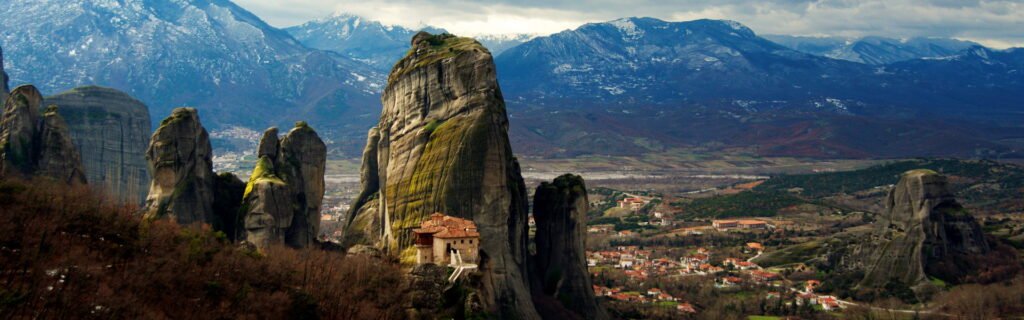
Meteora. Perched on the top of these huge and precipitous columns of rock, (there are some 60 of these columns of rock, a favorite haunt for climbers) are the famous cenobitic monasteries known as the Meteora which means “in the air” where you can see exquisite specimens of Byzantine Art. Of the 24 monasteries that were built between the 13th and 16th centuries only six are still inhabited: The Great Meteoron, Agia Triada, Agios Nikolaos and Varlaam by monks: Agios Stephanos and Roussanou by nuns. Stay overnight in the closest village to Meteora with the best view of the giant rocks and monasteries. See all Views tour will take you for a photo tour at the sunset. Meteora more…
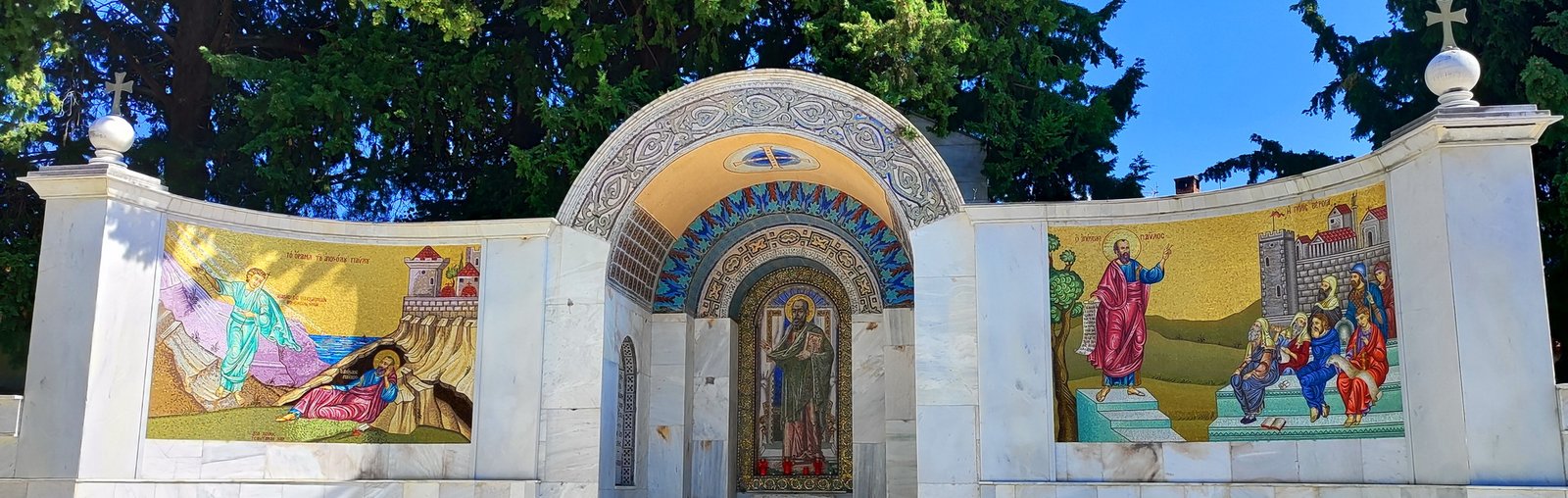
Veria. In the city of Veria (biblical Berea), Apostle Paul is most famous for his interaction with its “noble” citizens. After fleeing persecution in Thessaloniki around 50–51 AD, he found a remarkably receptive audience in Veria, Macedonia
- The Podium (Bema): You can still visit the Apostle Paul’s Tribune, a monument featuring Roman steps where tradition says he stood to preach.
- A “New Companion”: When Paul was forced to leave Veria due to agitators from Thessaloniki, the city gave him a new travel companion: Sopatros, son of Pyrrhus.
- “Little Jerusalem”: Because of Paul’s impact, Veria became a major Christian center, eventually earning the nickname “Little Jerusalem” for its dozens of Byzantine churches
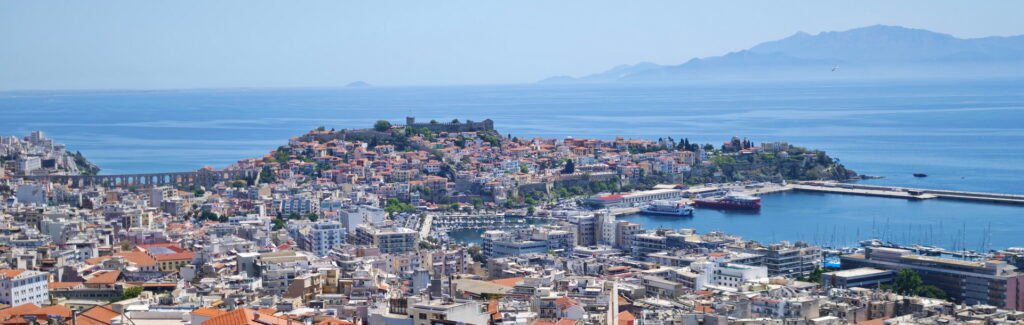
Neapolis – modern Kavala holds immense significance in Christian history asthe first place on European soil where the Apostle Paul set foot to preach the Gospel. During his second missionary journey (around 49-50 AD), Paul traveled from Troas to Neapolis by boat after a vision calling him to “come over to Macedonia and help us”.
Arrival in Europe: Neapolis served as the port for Philippi, located on the Via Egnatia road.
Significance: It is recognized as the gateway through which Christianity entered Europe.
Traveling Companions: Paul was accompanied by Silas, Timothy, and Luke.
Commemoration: A mosaic at the Church of St. Nicholas in Kavala marks the spot where Paul is believed to have first arrived. Following his landing, Paul moved inland to Philippi, where he established the first Christian community in Europe.
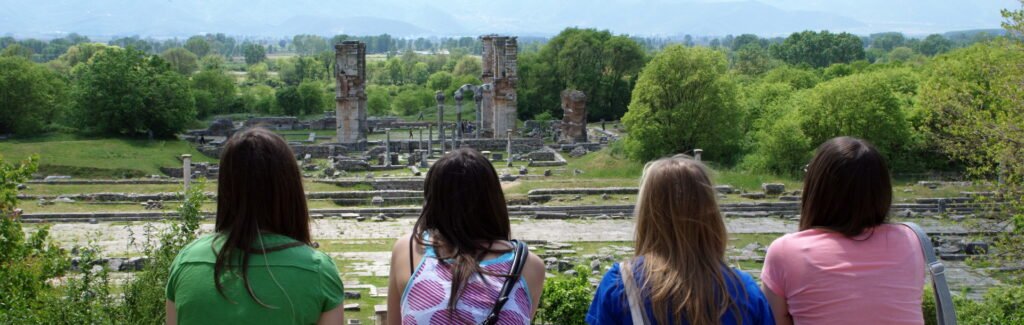
Philippi. Founded in the 4th century BC by King Philip II of Macedon.
Macedonian Roots: Originally a Thasian colony named Crenides, King Philip II conquered it in 356 BC to secure nearby gold mines. He heavily fortified it and renamed it after himself.
The Roman Shift: In 42 BC, the titanic Battle of Philippi took place just outside the city walls. Mark Antony and Octavian defeated Julius Caesar’s assassins, Brutus and Cassius, a pivotal event that triggered the rise of the Roman Empire.
The Gateway for Christianity: Around 50 AD, the Apostle Paul traveled along the famous Roman highway, the Via Egnatia, and arrived in Philippi. Here, he established the very first Christian community on European soil and baptized Lydia, Europe’s first recorded Christian convert.
Highlights to See:
- The Ancient Theater: A majestic structure built under Philip II and later modified by the Romans to host intense gladiatorial games.
- The Roman Forum: The sprawling commercial and political hub of the city, still showing intact public squares, temples, and monumental paths.
- Early Christian Basilicas: Spectacular ruins of massive 5th and 6th-century churches, including the prominent, pillared Basilica B.
- The Prison of St. Paul: The traditional, rock-carved site where local authorities allegedly imprisoned the apostle during his stay
- The Saint Lydia Philippisia Sacred Baptistery is a monumental Christian pilgrimage site located in Krinides, Greece, just west of the ancient ruins of Philippi. It commemorates the site on the Zygaktis River where the Apostle Paul baptized Saint Lydia of Thyatira between 49 and 50 AD, marking the very first documented Christian baptism on European soil
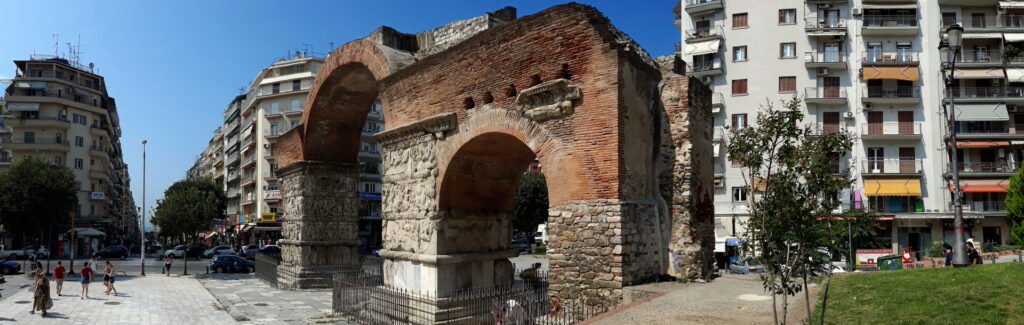
Thessaloniki – The Apostle Paul arrived in Thessaloniki around 49–50 AD during his second missionary journey, laying the foundation for one of Europe’s earliest Christian communities. After receiving the “Macedonian Call” in a vision, he traveled with Silas and Timothy to preach the Gospel in the city. While his teachings converted many locals, they also sparked intense riots among opponents, forcing him to flee under the cover of night. He later maintained a deep, affectionate connection with this flock, writing 1 and 2 Thessalonians to encourage them. Thessaloniki more…
Vlatadon Monastery: Situated in the historic Ano Poli (Upper Town), this is the only surviving Byzantine-era monastery in the city. Local lore suggests it was built on the exact spot where Paul preached to the Thessalonians, and where he scaled down the city walls to flee toward Veroia. It houses “St. Paul’s Stone,” where the apostle allegedly stood.
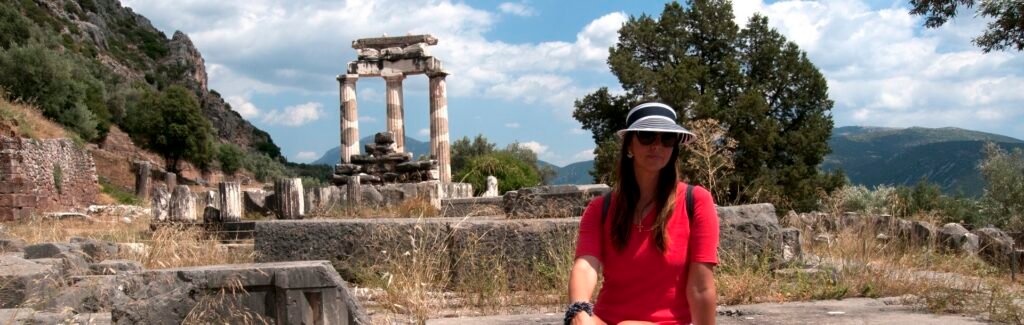
Delphi: The connection between the Apostle Paul and Delphi is primarily archaeological and cultural, as there is no historical or biblical record showing that Paul ever visited Delphi. However, Delphi remains a critical stop on modern “Footsteps of St. Paul” pilgrimages because it holds the Gallio Inscription, a monumental artifact that provides the absolute timeline for Paul’s life and the events written in the New Testament. Delphi more…
- The Biblical Connection: The inscription mentions Lucius Junius Gallio as the proconsul of Achaia.
- The Verification: According to the Bible (Acts 18:12-17), Gallio was the judge who dismissed the legal charges brought against Paul by religious leaders in Corinth.
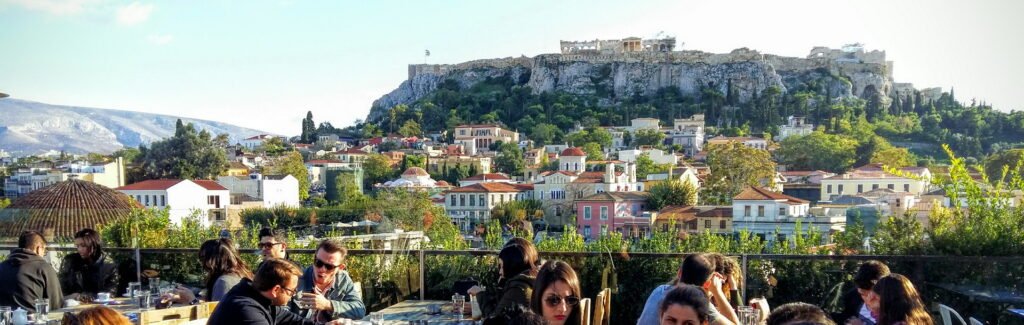
Athens: The Apostle Paul visited Athens in 51 AD during his second missionary journey, a pivotal historical moment recorded in Acts 17:16–34. Arriving from Berea, Paul initially stayed in the city as a place of safety while waiting for his companions Silas and Timothy. Deeply distressed by the city’s rampant idolatry, he began engaging the local population, culminating in his famous Areopagus Sermon. Athens more…
- The Ancient Agora: The civic and marketplace hub of ancient Athens. Paul spent his days here reasoning with local merchants, passersby, and prominent Epicurean and Stoic philosophers.
- The Synagogue: Before taking his message to the public square, Paul followed his usual custom of visiting the local Jewish synagogue to debate with Jews and God-fearing Greeks.
- The Areopagus (Mars Hill): A prominent marble rock outcropping situated just northwest of the Acropolis. The high council of Athens convened here to deliberate on legal, cultural, and religious matters.
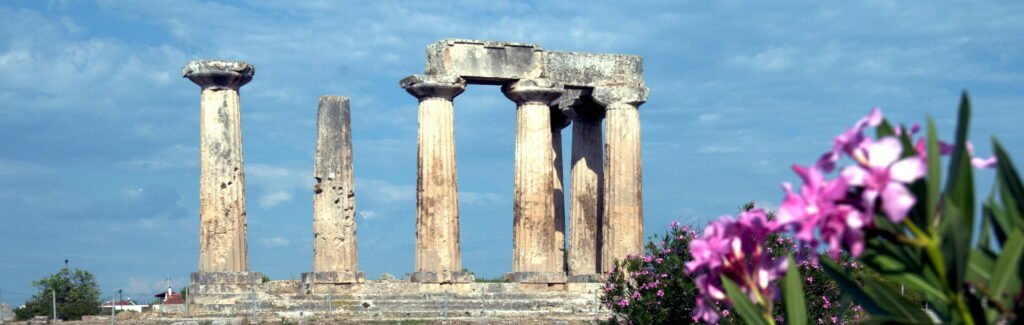
Ancient Corinth: The Apostle Paul’s time in Corinth was one of the most critical phases of his missionary work, lasting 18 months between AD 49 and 51 during his second missionary journey. Corinth was a bustling, wealthy Roman provincial capital known for its global trade networks, multi-cultural population, and notoriously decadent lifestyle. This environment served as a fertile yet challenging ground for Paul to plant and nurture the early Church of Corinth
Historical Landmarks in Corinth Today:
- The Bema of Ancient Corinth: Visitors exploring the Archaeological Site of Ancient Corinth can stand before the remains of the Bema, the monumental elevated judicial platform where Paul stood trial before Gallio.
- The Ancient Agora: The sprawling Roman marketplace where Paul lived, worked his trade alongside Aquila and Priscilla, and engaged everyday citizens in spiritual dialogue.
- The Erastus Inscription: A stone paving block found near the ruins bearing the name of Erastus, the city’s public works director. It directly corroborates the prominent Corinthian figure mentioned in Paul’s letter to the Romans (Romans 16:23).
- The Ancient Port of Kenchreai: Located on the eastern side of the isthmus, this is the historic harbor town where Paul cut his hair to fulfill a Nazirite vow before setting sail for Ephesus.